Blogs
AI is Not the Future, but the Present

Sukhbir Singh
Posted On February 2, 2026
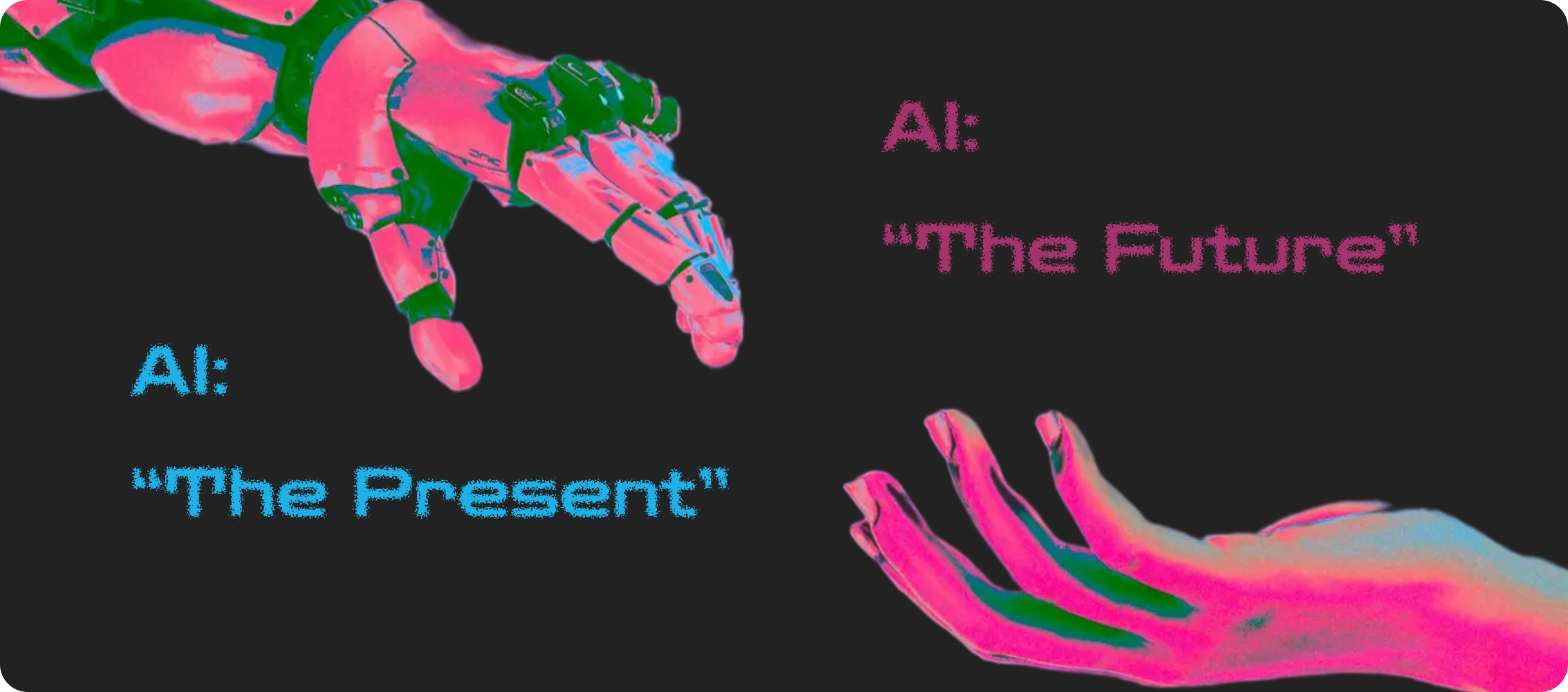
For the longest time, artificial intelligence has been spoken of in futuristic terms. We were told that AI would one day revolutionize the way we live, work, and design. It was always framed as something just beyond the horizon—an eventuality waiting to arrive. But that horizon has quietly dissolved into the present moment. AI isn’t some distant promise; it’s here, humming beneath our daily tools and shaping the experiences we design today.
Think about it. Every time Netflix suggests what you should watch next, or Spotify curates a playlist you didn’t know you needed, AI is at work. When you ask Google Maps for the fastest route home, or unlock your phone with your face, AI is doing the heavy lifting. Even in our design workflows, AI is no longer experimental—it is practical and deeply woven into the fabric of our creative processes. Tools like Figma, Notion, and ChatGPT have already placed AI in the hands of designers, not as an abstract concept but as an everyday collaborator.
This shift carries a subtle danger. By continuing to call AI “the future,” we unintentionally give ourselves permission to delay engaging with it. We imagine we have time to prepare, time to learn, time to adapt. The truth is harsher: the adaptation is already happening around us. Teams that wait risk being left behind. The question isn’t whether AI will disrupt UX design; it already has. The real question is whether we are actively participating in that disruption, or simply letting it wash over us.
At PeepalDesign, we have consciously chosen to treat AI as the present. It is not something we are preparing for, but something we have already integrated into our DNA. Our design process today includes curated AI toolkits, where we guide designers on which tools to use at which stage of their work—from research synthesis and ideation to wireframing, content creation, and testing. Rather than leaving AI adoption to chance, we have ingrained it into practice, ensuring that every designer has the confidence and clarity to collaborate effectively with these systems. This way, AI doesn’t remain a vague buzzword; it becomes a living part of how design happens here and now.
For UX designers everywhere, this moment is both thrilling and daunting. Our role is no longer confined to shaping interfaces. We are now tasked with shaping relationships—between humans and machines, between decision-making and automation, between creativity and computation. Designing with AI means moving beyond traditional heuristics and wireframes. It requires literacy in prompts, probabilities, and the biases hidden in datasets. It demands that we take ethical responsibility today, not tomorrow, for how fairness, transparency, and trust are built into the systems we release into the world.
At the same time, AI is shifting the very rhythm of our work. What once took weeks of prototyping can now be compressed into hours. Generating variations of content, testing different tones of voice, or visualizing abstract ideas no longer feels like a bottleneck. Designers are moving from being solitary creators to becoming strategic editors—guiding, curating, and elevating AI-generated outputs into human-centered experiences. It’s not about replacing creativity, but about redefining where creativity sits in the process.
And that’s where the opportunity lies. If we keep calling AI “the future,” we’ll always be chasing it. If we acknowledge it as the present, we start to take ownership. We begin to design deliberately for a world where human judgment and machine intelligence are already entangled. The narrative shifts from anticipation to integration, from speculation to practice.
AI is not something to prepare for. It is something to work with, here and now. And the designers who embrace this truth will not only keep pace with change—they will lead it.