Blogs
UX Design: The Silent Story You’re Already Living

Sanskriti Jha
Posted On July 1, 2025
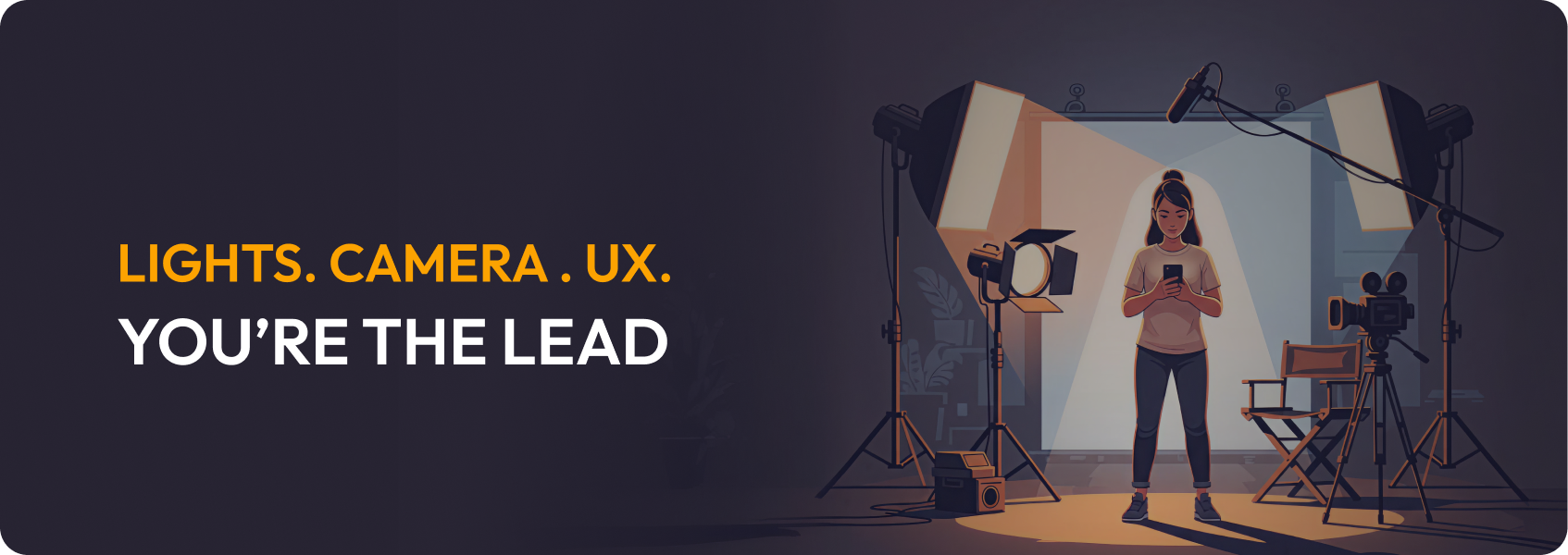
Every time you open an app, you’re stepping onto a set. The lights are on. The scene is dressed. And without even realizing it, you’ve become the lead character in a story.
The best products don’t just function—they feel like something. They carry mood, tension, release. Like your favorite films or novels, they pull you in, guide your actions, and leave you with an ending you remember.
Here’s the plot twist: UX, cinema, and storytelling all follow the same script.
The Opening Scene: You Step Into the Frame
You’re already the protagonist.
A book invites you into its world. A film frames your perspective. A product? It greets you with quiet cues—the layout, the colors, the first tap—saying, “You belong here.”
The set is built. The story starts. And you didn’t even have to audition.
The Rising Action: Every Choice Builds the Story
The hero always faces decisions.
In a novel, it’s a dilemma. In cinema, it’s that lingering glance or a risky move. In UX, it’s those micro-moments:
“Do I swipe left? Does this button do what I think? Is this safe?”
Each small choice advances your personal narrative—or halts it.
The Climax: The Critical Decision
Every story has its moment of no return.
In a film, it’s the reveal—the dramatic turning point. In UX, it’s the commitment moment:
“Buy now.” “Submit.” “Confirm.”
Here, design either holds you steady or makes you hesitate. It’s the climax of your journey—the second that defines how the story lands.
The Resolution: How the Story Leaves You
Endings matter.
A closing chapter. A lingering shot. In UX, it’s that final interaction:
“Order complete.” “Thank you.” “You’re done.”
But it’s not just words—it’s an emotional aftertaste. Do you feel accomplished? Confident? Lost? That final frame decides whether you trust the experience—or forget it.
The Behind-the-Scenes: Designing the Illusion
Every smooth story hides countless edits.
Writers rewrite. Directors reshoot. Designers iterate, again and again. Every pixel, transition, and micro-interaction is crafted to feel effortless.
When done right, you don’t notice the design. You feel the story. And you stay.
Why This is the New Standard
In a world overflowing with screens and interfaces, the products that resonate—the ones we return to—don’t just function. They unfold. They’re cinematic. Intentional. Human.
They make you feel like the protagonist of your own small, digital adventure.
So the next time you unlock your phone, remember:
You’re already in the story.
The question is—does the design make you want to stay until the credits roll?